




Fall asleep easily! Tips for taking a nap to boost your afternoon performance
By the afternoon, my brain just wouldn't work.
During meetings, my mind becomes jittery and I start seeing double text on the computer screen.
"I want to concentrate, but my body just can't keep up..."
I'm sure everyone has had that experience at least once.
In times like these, we recommend taking a nap.
...Some of you might think that writing this makes you seem like you're slacking off, but the truth is that napping is the ``ultimate business skill'' that can dramatically increase your work efficiency .
There's a good reason why well-known companies like NASA, Google, and Apple have implemented naptime policies.
However, it's not enough to just sleep; there are a few tricks you need to know to "sleep well."
In this article, we will introduce practical and casual tips for taking a nap that are scientifically backed and will help you fall asleep easily and wake up feeling refreshed.
Starting this afternoon, you might see a dramatic improvement in your concentration.
1. Sitting is better than lying down
If you think that taking a nap means lying down, wait a moment.
If you lie down deeply, your body goes into "full sleep mode" and you may feel rather drowsy when you wake up.
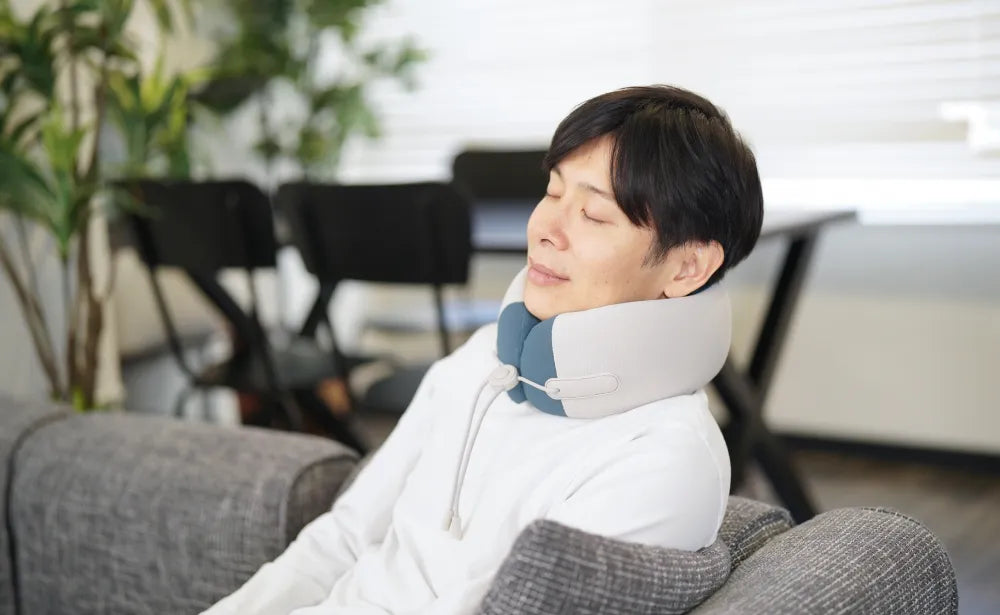
Therefore, we recommend taking a nap while "sitting." By sleeping lightly with your head on the desk or your back leaning against a chair, you can stimulate your sympathetic nervous system just enough and prevent yourself from falling into too deep a sleep.
It's exactly like saying, "You can only use third gear when taking a nap."
Be careful, if you accidentally shift into 5th gear (deep sleep), you'll wake up wondering, "Huh? Where am I?"
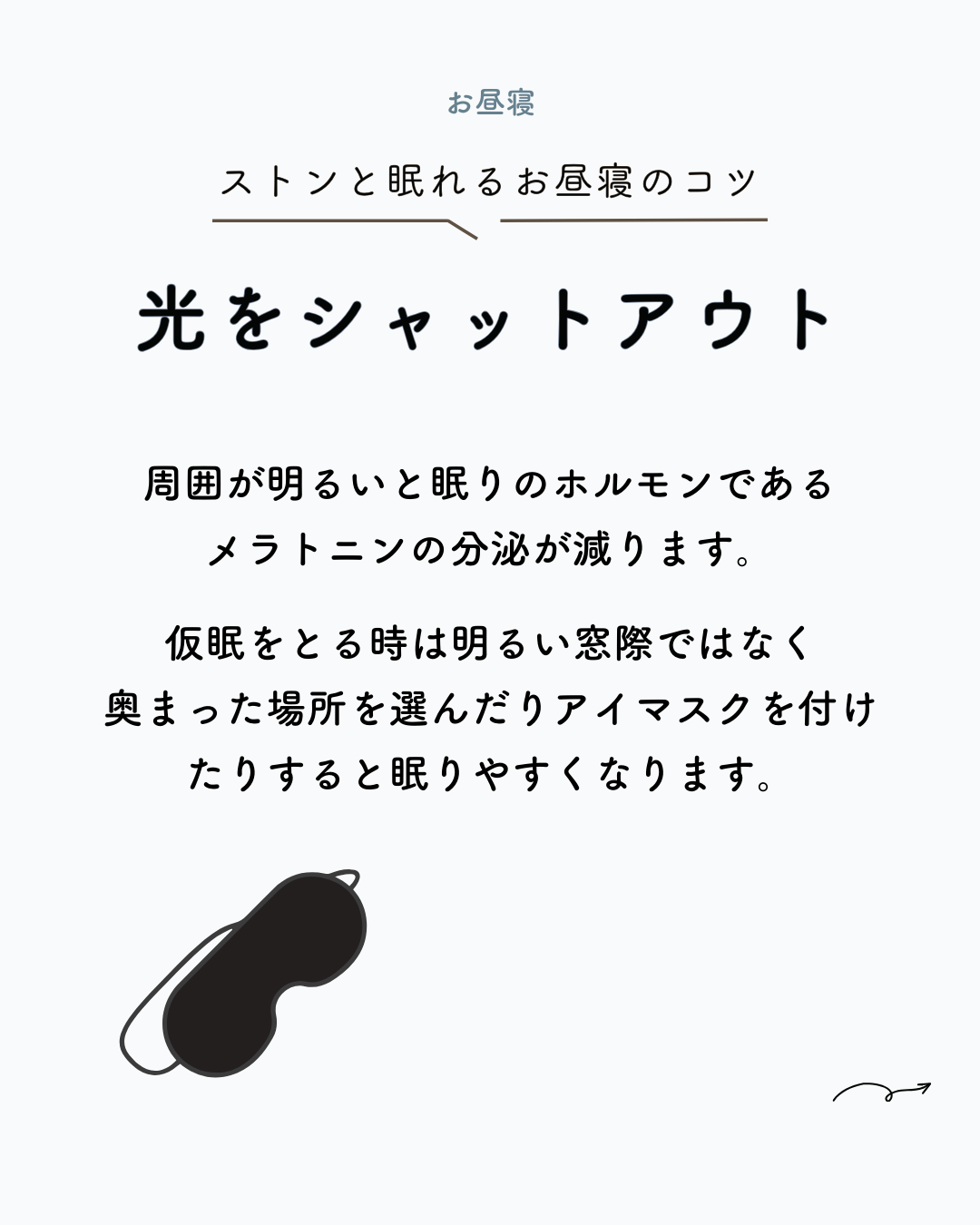
2. Light is your enemy. Shut it out
The human body clock is incredibly sensitive to light.
When exposed to bright light, your brain sends the command, "It's daytime! Get up and get to work!" and the secretion of melatonin, the sleep hormone, stops.
In other words, if you try to sleep in a bright room, the god of sleep will not come down easily.
As a countermeasure,
- Close the curtains
- Turn off the lights
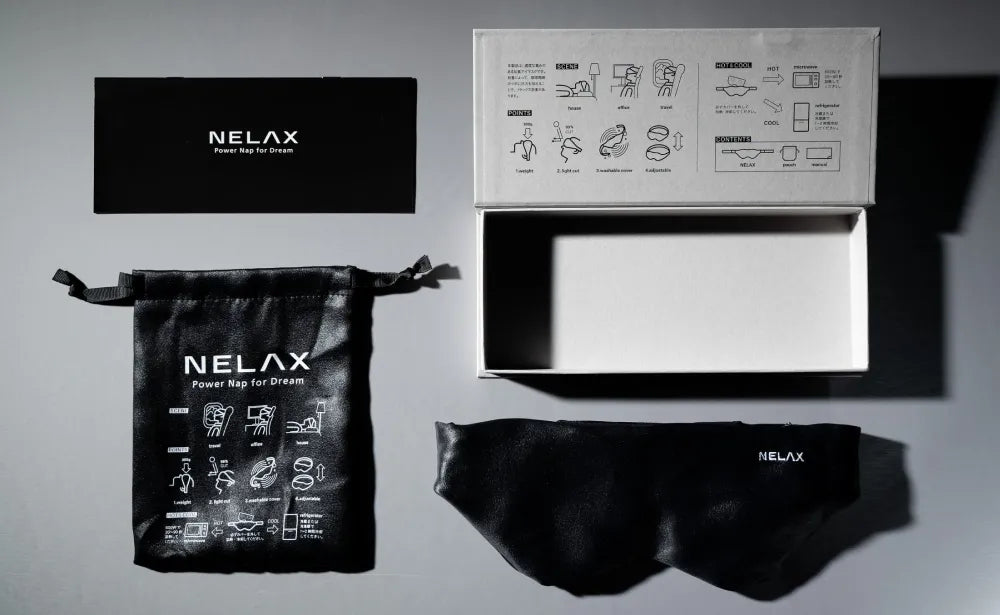
- Use an eye mask
This is a sure thing.
Eye masks in particular are convenient items that allow you to have night vision only for your eyes even when the surroundings are bright.
Additionally, the blue light from smartphones also reduces melatonin levels.
I don't recommend browsing cat videos on social media before going to bed (even though cats are cute).
3. Noise is more effective for the brain than silence!
Have you ever been in a place that was too quiet and made you so nervous you couldn't sleep?
In fact, the brain sometimes feels more reassured by a little noise than by silence.
We recommend "white noise"
This is an artificial reproduction of environmental sounds that make you feel like you are in nature (such as the sound of waves, rain, and wind).
It gently reduces brain activity and puts you into a relaxed state.
All you need to do is download the free app onto your smartphone and play it through your earphones.
By the way, if you are bothered by people talking in the office, the best combination is noise-canceling earphones + white noise.
4. Caffeine and naps are a golden combination!
"If I drink coffee before going to bed, I won't be able to sleep..."
You might be tempted to say, "What?", but wait a minute.
The stimulating effect of caffeine actually starts to take effect 20 to 30 minutes after drinking it.
So what does that mean?
Yes, if you drink a cup of coffee before taking a nap and then just go straight to sleep...
The effects of caffeine kick in as soon as you wake up!
This is the secret trick known as the "coffee nap," and its effectiveness is scientifically proven.
But please note:
- Coffee is dark roast (less caffeine) than light roast
- No caffeine after the evening
5. Naps are pointless unless they are taken during the day.
Timing is key when it comes to taking a nap.
The ideal time is after lunch, between 1pm and 3pm .
This is the "physiological valley" during which your body temperature drops and you naturally feel sleepy, making it the perfect time for a nap.
On the other hand, going to bed after 5pm can have a negative impact on your ability to get a good night's sleep .
Countermeasures include:
- Set a timer for 20 minutes after lunch
- Set aside time for a nap between meetings and work
- Write "NAP" proudly on your schedule
6. Even if you don't sleep, just closing your eyes can be effective
There are days when you get excited and say, "Okay, I'm going to take a nap!", but when you actually try to go to sleep, you find yourself too awake and can't fall asleep.
But it's okay.
In fact, even if you don't sleep, your brain can get a good rest just by closing your eyes .
Simply closing your eyes and taking a deep breath can have a refreshing effect.
Once it becomes a habit, your body will remember that it's okay to relax at this time.
✔ Summary of "Tips for a good nap" that you can start using today
- Taking a nap in a sitting position
- Protect your melatonin by blocking light
- Quiet your brain with white noise
- Counting back your caffeine intake
- Fall asleep within 20 minutes during the day (1:00 PM to 3:00 PM)
- You don't have to sleep, just close your eyes!
A nap isn't just a break.
It's an important recovery time that allows your brain and body to "reboot."
In the afternoon, you will go from "someone who is rubbing their sleepy eyes and working hard" to
This should give you some hints on how to become someone who can achieve results with ease.
From today, you can be the kind of person who can proudly say, "I'm going for a nap!"
Close your eyes, take a deep breath, 3, 2, 1... stomps.